
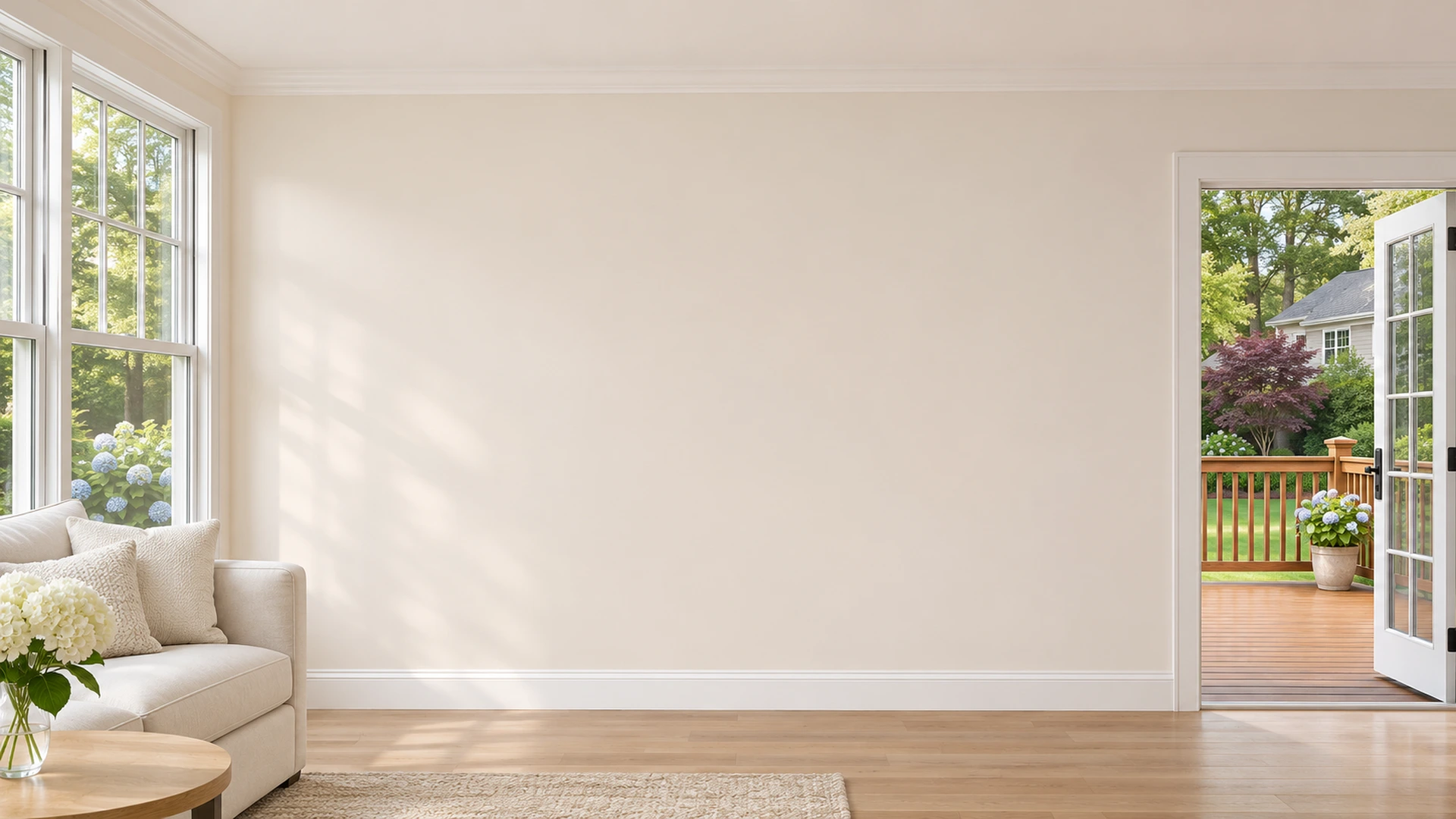
The living-room wall looks even from the sofa. Walk toward the window, though, and broad darker bands appear where the roller passes overlap. Moving a lamp may change how obvious they look, but it does not settle why they are there. Before rolling more paint over one stripe, take a closer look at the finish.
For a Middletown living room, the useful first step is to describe the problem under the light you normally use. A painter needs to know whether the bands appeared during the last coat, after touch-ups, or only when the wall dried. The paint can and a few notes may answer more than another experimental patch.
Check the wall after the stated drying time
Follow the paint label's drying and recoat directions before judging a fresh coat or adding another one. Drying and full curing are different stages. Record when the last coat went on, and avoid rubbing a fresh finish to see whether a band will disappear. Give the surface the time its product requires.
Look from the doorway, beside the window, and from the usual seating position. Take photographs under the same lighting if you need to explain what you see. Note whether the bands follow roller-width overlaps or whether the changes surround isolated repaired spots. These observations help frame the assessment without declaring the cause from a photograph alone.

Separate overlap marks from other uneven areas
Painters call this lapping: a difference in color or sheen where wet and dry layers overlap, and keeping a wet edge is the usual way to avoid it. That is a useful explanation for a striped wall, but other conditions can also leave an uneven appearance, so the surface still needs inspection.
Show the painter any patched holes, previous spot repairs, and places where the wall texture changes. Bring out the paint label if you have it, including the product and sheen. A color name by itself leaves out information needed to plan the next coat. Mention if different cans or tools were used on adjacent sections.
Show the wall in the light where you first noticed the bands.
Decide how much of the wall needs attention
It is tempting to cover only the stripe that catches your eye. Ask whether that would introduce another visible edge once the paint dries. The proposed repair may need to reach a natural stopping point, such as a corner, so the finished area reads evenly. Have the painter explain the boundary before work begins.
Clarify whether the plan includes preparation, any necessary primer, and repainting the wall face. Ceilings, trim, and neighboring walls should have an explicit scope too. If the underlying surface needs repair, settle that before discussing the final coat. A new layer of paint should follow a plan for what is already underneath it.
Prepare the room for a continuous painting pass
A clear route along the wall helps the painter work without stopping to move small items. Decide who will shift the sofa, remove wall decorations, and protect the floor. Point out wall-mounted equipment and anything that needs specialist handling. Do not unmount heavy items just to make the room look ready.
Ask how the chosen product's application conditions, drying time, and ventilation instructions affect use of the room. Plan where people and pets will go while the work is underway. The painter should choose the roller and working sequence to suit the coating and surface. Keep the discussion tied to the wall rather than assuming every room needs repainting.
Agree on the lighting for the final look
Wences Pro Painting's interior painting page explains the service, and the Middletown painting page is the local starting point. Use the consultation page to describe the bands, the room, and the product information you have. Include a wider view of the wall along with a detail photo.
Before the work starts, agree to check the finish after the stated drying period from the positions where you normally see it. If the window is where the bands first stood out, include that view. Keep the product details and the agreed wall boundary with your project notes so a later touch-up begins with useful information.
ChatGPT-generated illustrative photos. The video uses gentle camera motion created locally from an illustrative photo. These images and video do not show customer work.