
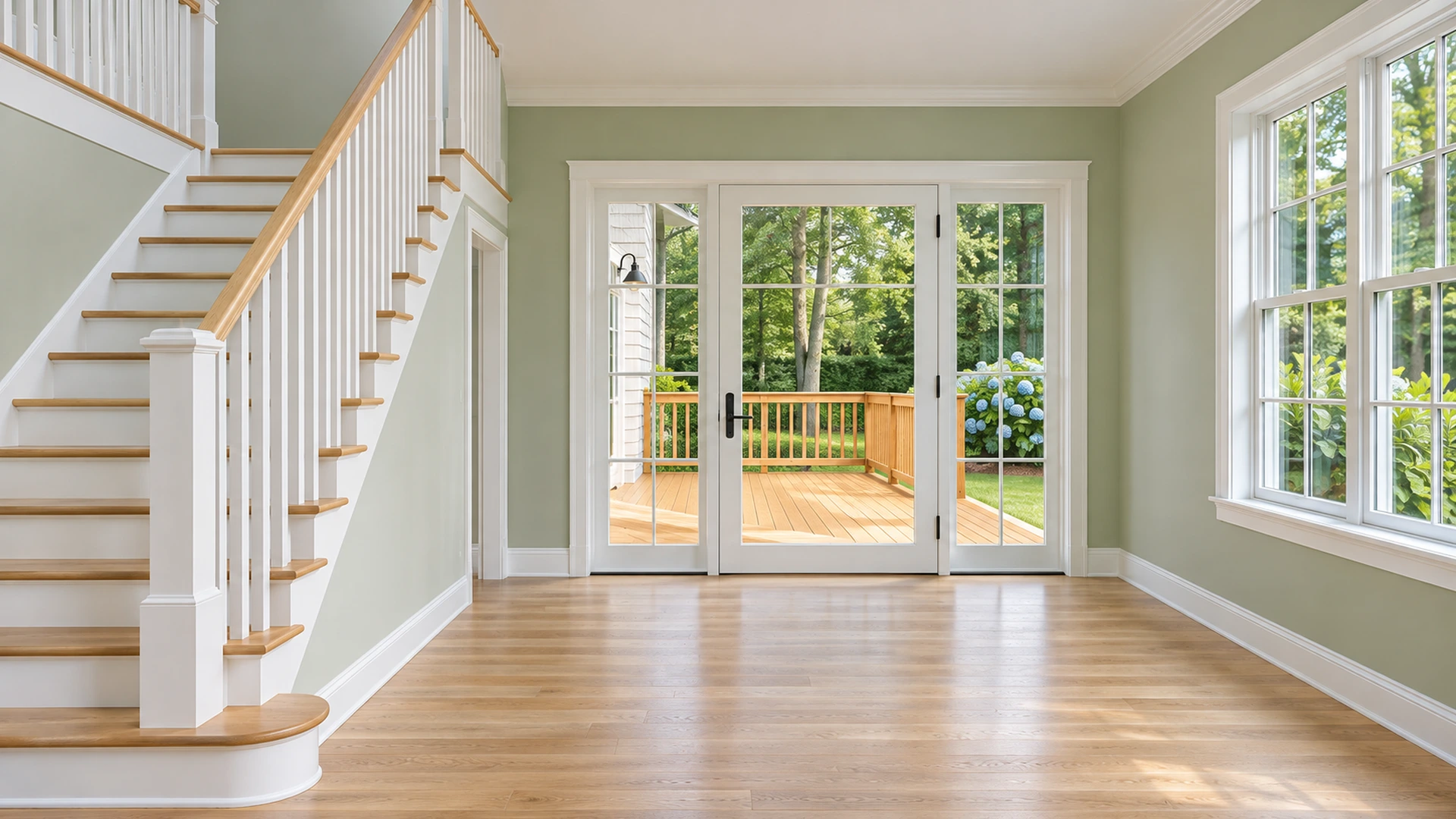
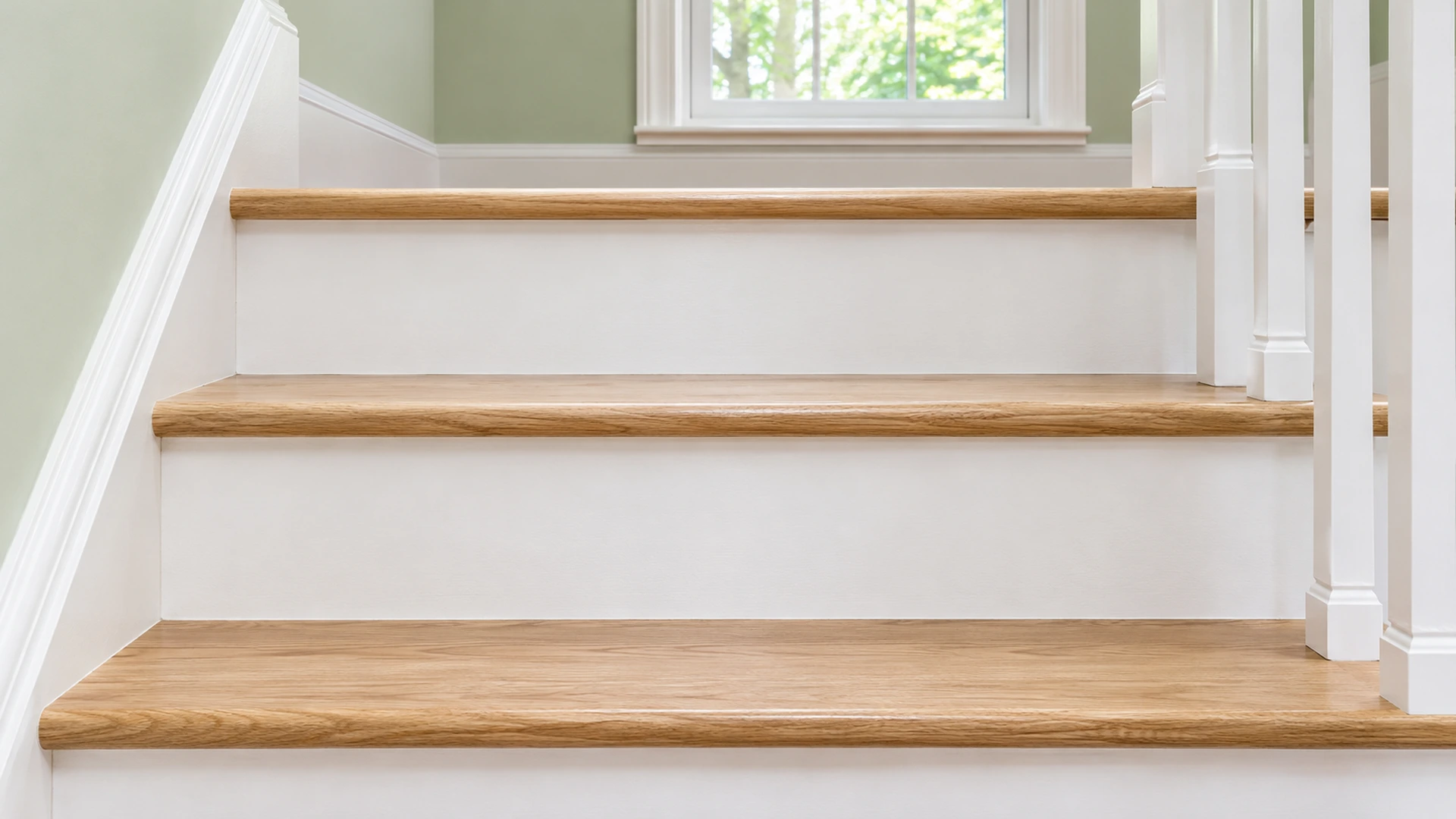
The stair treads look fine, but the white faces below them have gray shoe marks. You notice them every time the afternoon light reaches the hall. In a Little Silver home where those stairs are used all day, repainting the risers sounds like a small project until you think about how everyone will get upstairs.
Start by separating the visible marks from the work you actually need. A riser is the upright face of a step. The tread is the surface you walk on. Painting one does not automatically mean painting the other, and that distinction matters when discussing products, protection, and access with a painter.
Look at the marks without making them worse
Check whether the finish is intact or whether you can see chips, peeling, or bare material. If you know the existing coating and have its care directions, a gentle cleaning test may help distinguish a surface mark from damaged paint. Follow those directions and let the spot dry before judging it.
Stop if cleaning changes the sheen or lifts the finish. Don't keep scrubbing a mark until the surrounding paint looks different too. Take a few clear photos in the light that shows the problem. Note which risers are affected so the consultation can focus on the actual condition of the stairs.
Keep the painting scope specific
Decide whether you want only the risers repainted or whether the nearby trim is also part of the job. Stair skirts, balusters, rails, and treads are separate surfaces. Point to each area rather than relying on a broad request to “freshen up the staircase.” That keeps the estimate easier to understand.
If you are considering interior painting, ask how the existing finish will be assessed and what preparation is appropriate. A new coat cannot secure a loose stair part or solve movement underneath it. Any structural concern needs the right repair before the finish work is planned.
Plan how the household will use the stairs before choosing a painting date.
Discuss preparation before picking the finish
Tell the painter what you know about earlier coatings and repairs, including any areas that were recently touched up. If the coating history is unknown, say so. Let the professional assess the preparation and any necessary precautions before anyone starts sanding or disturbing old paint.
Ask how the oak treads, adjacent walls, and nearby floor will be protected. You should also know who clears the stairs and where shoes, bags, and other everyday items will go. Keep the landing free of storage. It is easier to plan a clear route now than to find space after the work area is set up.
Work out access for the whole household
Think through the rooms that can only be reached by those stairs. Bedrooms, bathrooms, and laundry may all depend on the same route. Tell the painter about children, pets, or anyone who needs frequent access. Agree on the sequence and restrictions before accepting a work date.
Dry-to-touch time and readiness for normal use are not the same thing. The chosen coating, conditions, and application instructions determine the waiting period. Ask for clear directions about when people can use the stairs and how to avoid brushing freshly painted risers. Don't improvise a route around wet work or remove protection before the painter says it is ready.
Bring a short list to the consultation
For a Little Silver painting consultation, have your photos and the list of affected risers ready. Note whether the same color is the goal, whether you have the original paint information, and which surfaces should remain untouched. A match cannot be promised from a photograph alone.
Use Wences Pro Painting's project consultation page to discuss the staircase and daily access. Ask for the preparation, coated surfaces, protection, and return-to-use instructions to be clear in the agreed scope. Once the work is finished, keep the product and color information with your home records. Follow the coating's care directions before cleaning new marks, so the next shoe scuff doesn't turn into an avoidable patch of rubbed paint.
Illustrative images generated with ChatGPT; video uses gentle camera motion over an illustrative image. These are not customer homes or completed jobs.