
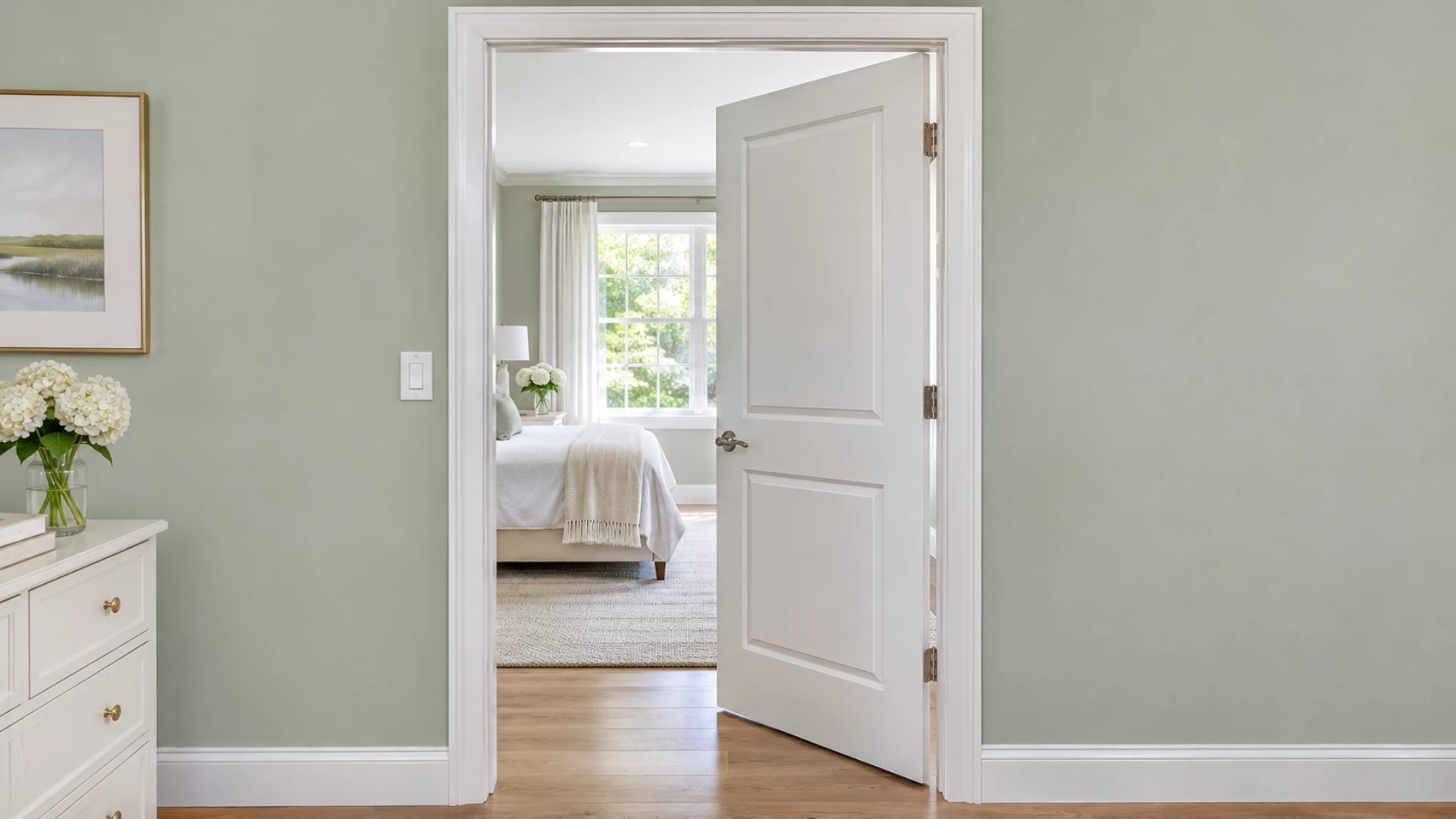
The bedroom door closes, but opening it takes a tug. There may be a small clicking sound as the painted edge comes away from the frame, or a fresh mark where the two surfaces touch. Once that happens every evening, a small finish problem becomes part of the household routine.
If you are planning interior painting in Holmdel, put that door on the list before work begins. A fresh coat needs a sound surface and enough room for the door to operate. The useful first step is to show the painter exactly what happens when you open and close it.
Notice where and when the door catches
Look at the door in daylight without forcing it. Does it catch near the latch, at the top corner, or along the narrow strip it rests against when closed? That strip is the door stop. Note any matching marks on the door and frame, and take a close photo for the consultation.
Think back to when the problem started. Did the door work normally before a recent repaint? Has it always needed a push? Does it catch even when the latch is held clear? These details help the person assessing it distinguish a finish concern from a fit or hardware problem.
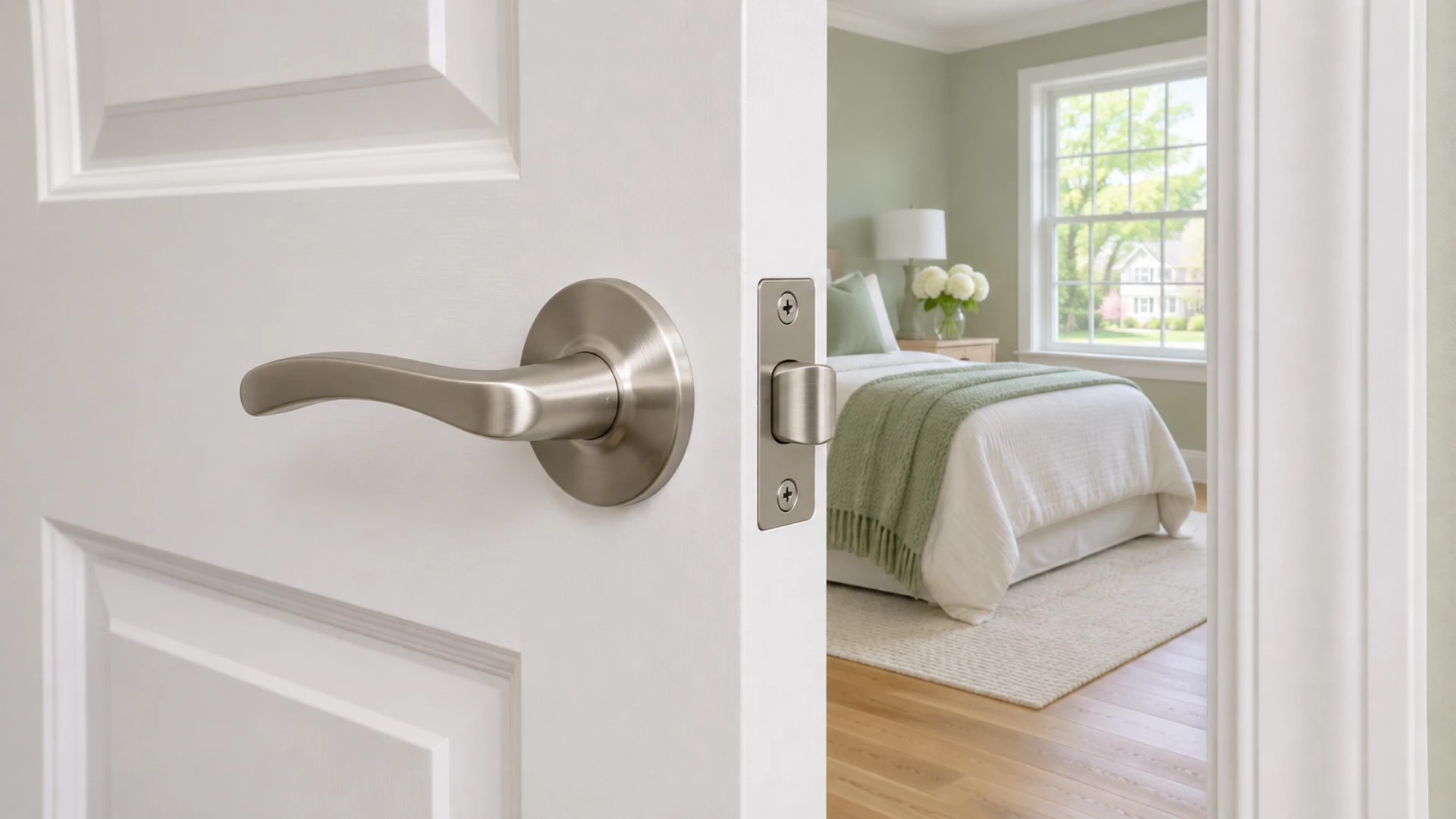
Ask whether the paint is sticking to itself
Two painted surfaces can stick together when they press against one another. Painters call this blocking. Opening the door may then leave marks or pull away some of the finish. The coating used and the time allowed before the surfaces touched are details worth checking.
If you still have the paint label or an invoice naming the product, keep it handy. A color name alone does not identify the coating. Tell the painter when the door was painted and how soon it was closed afterward, if you know. There is no need to reconstruct a history you do not have.
Show the painter where the door catches before choosing its next finish.
Have the fit checked before refinishing
A door that rubs against the frame needs an assessment of its clearance as well as its paint. Ask who will check the hinges, latch, and fit. If adjustment or carpentry is needed, agree who handles that work and whether it belongs in the painting scope.
Leave scraping, sanding, and trimming to the person assessing the surface. Removing material before the cause is understood can create another problem, and old coatings need appropriate preparation. Avoid trying household oils or other quick fixes on the painted edge. Tell the painter if anything has already been applied there.
Name every surface included in the quote
A request to paint a bedroom door can mean one face, both faces, the edges, or the surrounding frame too. Walk through those choices while the door is open. Include the stop where the sticking occurs, and ask how loose or damaged finish at that point will be handled.
Wences Pro Painting’s interior painting service includes trim work. Describe this particular problem when requesting a scope, so the consultation covers how the door operates as well as how its finish looks. Confirm whether hardware removal and reinstallation are included and how the nearby floor will be protected.
Plan for the bedroom to be in use
Tell the painter whether someone sleeps in the room every night and whether pets or children need to be kept out. Ask how access, ventilation, and privacy will work while the finish dries and cures. Make those arrangements before the door is taken out of ordinary use.
Follow the selected product’s instructions and the painter’s return-to-use guidance. A surface that feels dry may still need more time before it can tolerate contact with another painted surface. Ask specifically when the door can close fully and when routine cleaning can resume. A general promise that the room will be ready tomorrow leaves too much unclear.
Include the door in the final walk-through
Once the finish is ready for normal use, check the door with the painter. Watch the edge that used to catch, and confirm the latch works without having to force the door. Keep the product details with your room notes for future care or touch-ups.
For a Holmdel painting project, you can begin with one bedroom door and explain any related trim concerns during the same conversation. Contact Wences Pro Painting with the location of the sticking, the finish history you know, and how the room is used each day.
Images are AI illustrations. The silent video uses local camera motion over the illustrative hero photograph.