
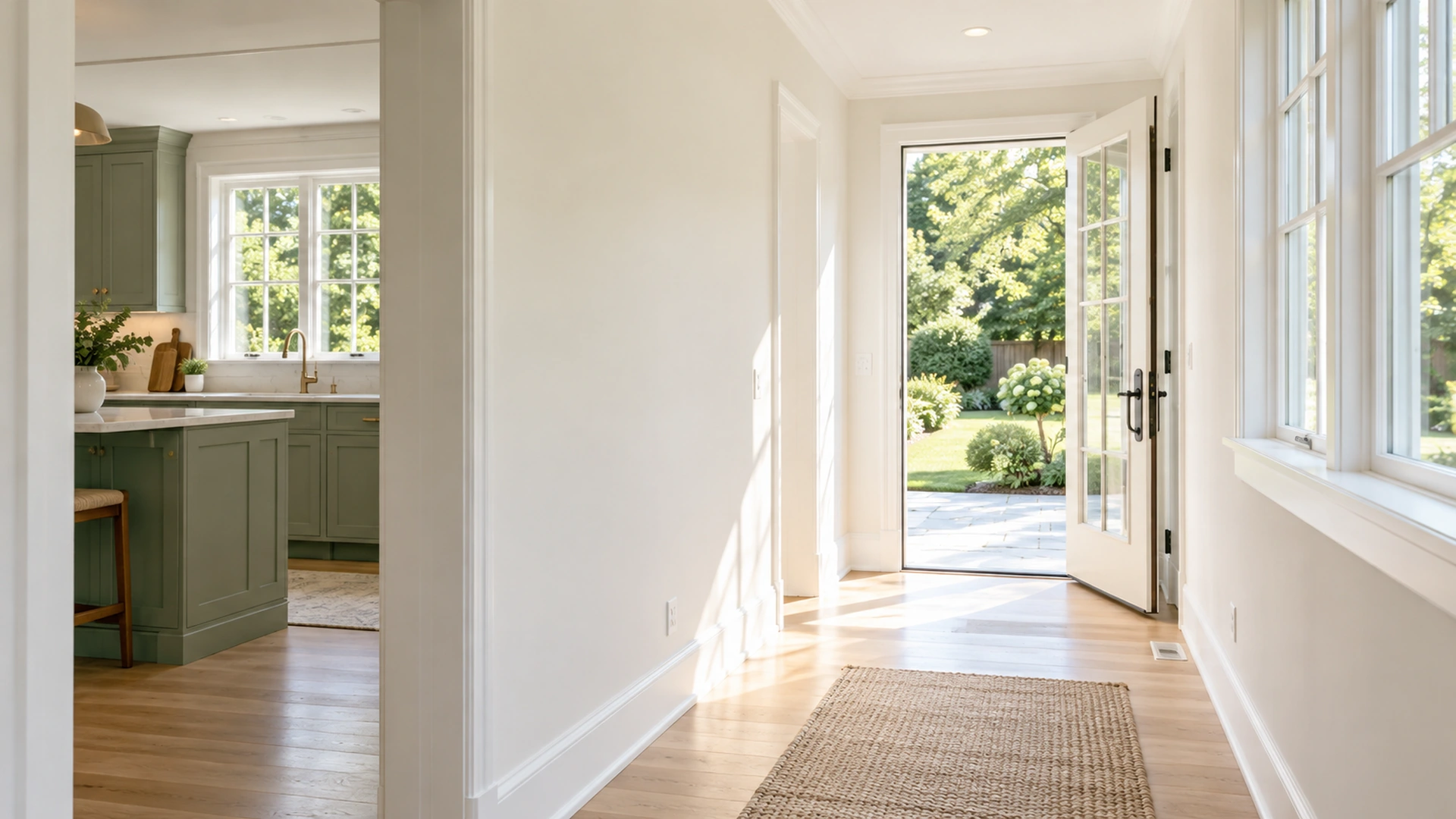
The back-door hallway is easy to overlook until daylight catches the wall beside it. A bag has left a dark scuff near the corner. A previous touch-up looks lighter than the surrounding paint. From the kitchen, the patches may be more noticeable than the original marks.
For a Fair Haven homeowner, the useful question is how much of that hallway needs painting to get an even-looking result. Before adding another dab of paint, take a look from the places where you normally see the wall and decide which marks you want a painter to assess.
Look along the wall from the doorway
Stand at the back door, then look from the adjoining room. Check the hallway with daylight coming in and with the lights you use in the evening. Take a wider photo from each position. A close-up can show a scuff, but it leaves out the patch's place on the wall and the light around it.
Note whether the mark stays dark from every angle or becomes more noticeable as you move. Also point out any dents, peeling areas, or raised edges. You do not need to diagnose the finish yourself. These observations give a painting contractor in Fair Haven something specific to examine during the visit.
Include the view with the door open if that is how the hallway is often used. That angle belongs in the conversation about the finished result.
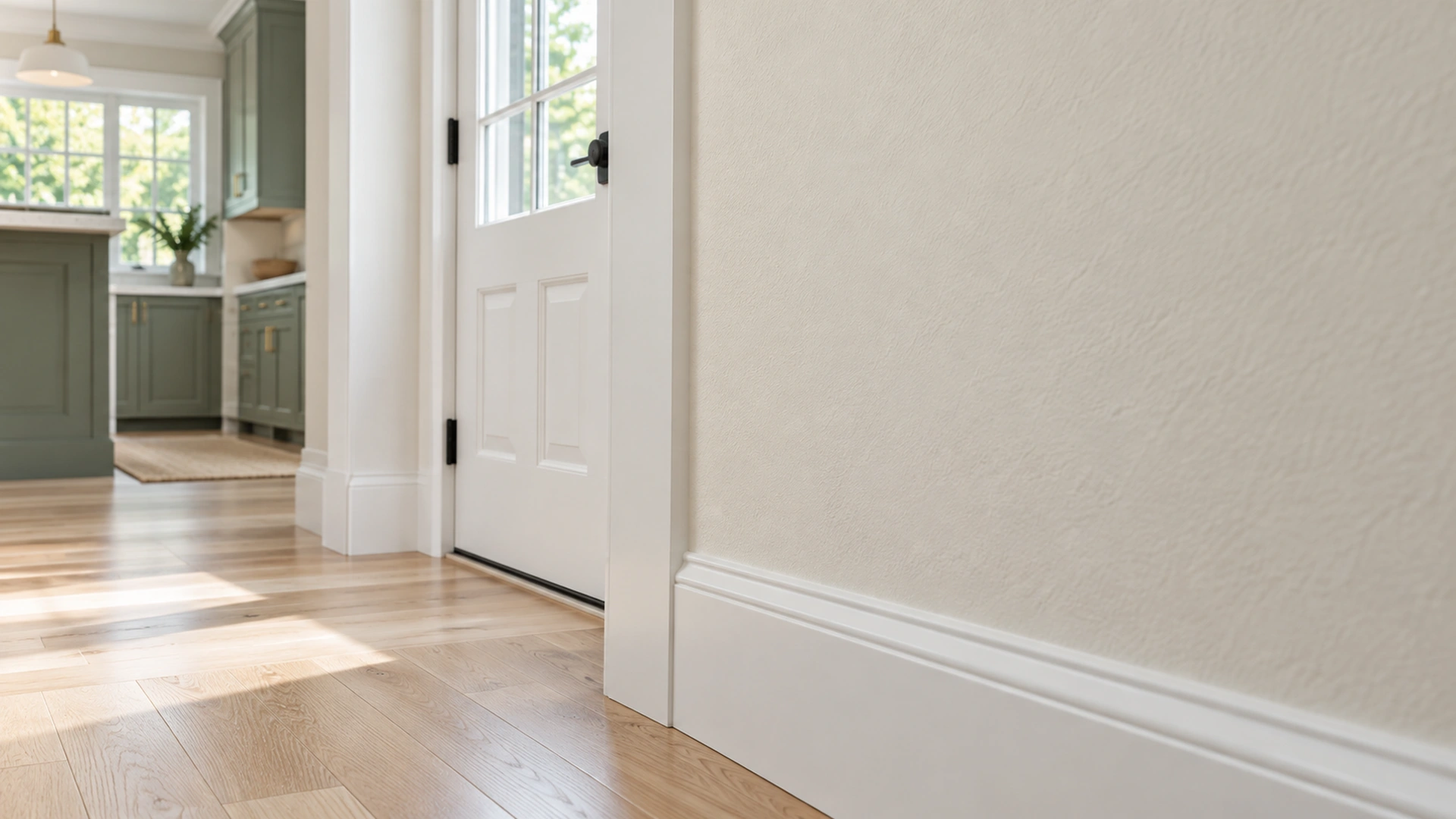
Separate a surface mark from a paint repair
A dark rub mark and a chip in the coating call for different attention. Before attempting to clean a painted wall, check the paint manufacturer's care instructions. Use the recommended method and test in an inconspicuous place. Stop if cleaning changes the finish or removes paint.
If the scuff comes away and the surrounding finish still looks even once dry, that spot may need no painting. A dent or damaged coating needs an assessment beyond cleaning. Show the painter both the original damage and any areas you have already worked on.
Be clear about your goal. You might want the wall to look consistent from the kitchen doorway, or you may be concerned about a damaged corner at hand height. A painter can discuss what each repair involves after seeing the surface.
Show the painter the hallway from the doorway where you notice the patches every day.
Understand why a touch-up can remain visible
Matching the color name is only part of a touch-up. The paint product and sheen matter, and the application tool can affect the texture left behind. A brushed patch on a rolled wall may catch your eye even when the color seems close.
If you still have the original paint, show it to the painter before buying anything else. Ask whether a limited test makes sense and how long that product needs before the result can be judged. Avoid expanding a small test into several new patches while the first one is still drying.
Have the discussion about expectations early. Touch-up work may blend acceptably, but an invisible match should not be assumed. If earlier repairs already stand out across the hallway, ask for an assessment of the whole wall instead of another round of isolated spots.
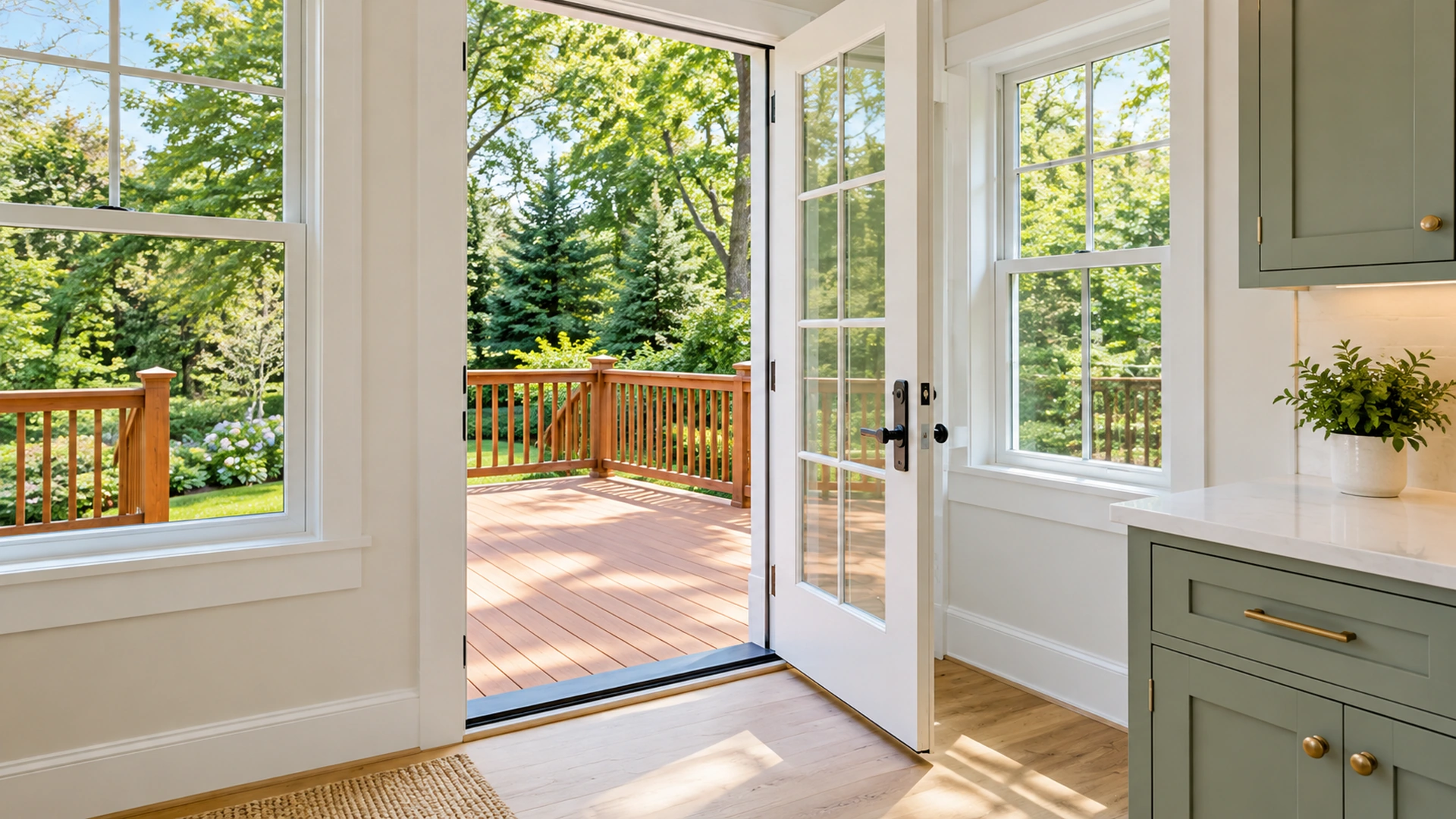
Compare a spot repair with painting one full wall
Ask the painter to explain where each proposed option begins and ends. One option may address a limited damaged area. Another may paint the affected wall to its corners. If the hallway continues into a room without a clear break, walk through where the painting would stop before agreeing to the work.
Keep the door casing and baseboard in that conversation. Scuffs on trim are separate from marks on the wall, and including one does not automatically include the other. Wences Pro Painting's interior painting service covers walls, ceilings, and trim; the written scope should identify the surfaces selected for your hallway.
Discuss the finish in terms of daily use. Tell the painter where bags brush past and where hands touch the wall. Ask how the proposed product should be cleaned after it has cured, using that product's own guidance.
Plan the back-door access before work starts
This hallway may be your route to the yard or the place the dog goes out. Explain that when you contact Wences Pro Painting. Ask which doorway to use during the work and when the painted surfaces can return to normal use. Drying and curing instructions depend on the chosen product and conditions.
Send the wider hallway photos with your request and identify the patches that bother you most. At the final walk-through, view the agreed surfaces from those same positions, with the back door in its usual position. Bring any remaining concerns to that walk-through so you can discuss the actual wall together.
AI-generated illustrative images; not photographs of customer homes or completed customer work.